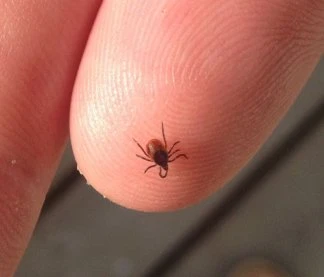
 “In patients with persistent symptoms, I think the number with co-infections is almost 100%. I only have a few patients with classic Lyme.” – Elke SchäferLyme (Borreliosis), Anaplasmosis, Ehrlichiosis, Babesiosis, Rocky Mountain Spotted Fever, Bartonella, Tularemia, and more recently, Borrelia miyamotoi (a distant relative of Lyme Borreliosis) are recognized tick-borne infectious diseases in the United States, of which Lyme disease is the most common and fastest growing illness. Doctors globally say they are seeing a significant growth in co-infections when treating Lyme patients with chronic symptoms. Dr. Richard Horowitz, author of the newly released book, Why can’t I get Better?: Solving the Mystery of Lyme and Chronic Disease, explained in Part 14 of my “Ticks” series that ticks now contain “multiple bacterial, viral and parasitic infections which can be transmitted simultaneously with Borrelia burgdorferi, the agent of Lyme disease.” Horowitz believes that patients infected with Lyme disease and associated co-infections are “much sicker and resistant to standard therapies.” In Part 8 of “Ticks, ” German Lyme disease specialist Dr. Armin Schwarzbach commented that based on his research with patients, his impression is that Lyme disease is epidemic while co-infections are endemic. Finally, both Dr. Dan Cameron (President of ILADS) and Dr. Paul Auwaerter (Infectious Diseases Society of America – IDSA) have stated that active tick epidemiology studies to understand what ticks carry in regions of the United States must be a research priority.
Today in Part 15 of “Ticks, ” you will hear similar views on Lyme and the co-infections issue from ILADS doctor Elke Schäfer. Elke runs a medical practice in Graz, Austria where she is treating a growing number of Lyme patients from all over the country.
 What is the annual incidence of Lyme disease in Austria? Would you also comment on the annual incidence of any other tick-borne illnesses that are endemic in Austria in addition to Lyme?
There is no official source for Lyme disease incidence in Austria. Some experts say there are only 200-500 cases per year. However, Lyme disease is not a notifiable infection in Austria. The big problem in Austria is the bulls-eye rash criteria for diagnosis. This is only found in 30-50% of newly infected patients. Hence, only a few doctors here are diagnosing the problem properly. Health authorities tell patients to look out for the redness in diagnosis as an allergic reaction or a fungal infection. We also know that the bulls-eye rash can disappear without any treatment. Hence there are a number of infected patients who go untreated. In Austria, the standard antibiotic treatment for Lyme is 10 – 14 days with doxycycline or 21 days with Penicillin. Therefore, the number of chronic Lyme cases continues to increase each year.
There also aren´t any studies about other tick-borne diseases here in Austria. Ticks are vectors for many other infections — for example, Bartonella, Babesia, Ehrlichia and Rickettsia, to name a few. Lyme Patients with chronic symptoms often suffer from Herpes (Simplex, VZV, EBV, HHV6), Chlamydia pneumonia infections, Mycoplasma and also Bornavirus infections. The large number of co-infections which exist make patient treatment more difficult. Patients with co-infections have to be treated much longer and with more expertise in order to become healthy again.
“As a basic principle, the guidelines should say as long as the patient continues to have symptoms, treat as one would a chronic illness. Every Lyme patient is different because of the various co-infections involved and the damage the disease might have caused to the patient.” – Elke SchäferBased on your own experience, how big is the problem with co-infections? Which co-infections are you seeing most often?

here